

Recovery isn't about stopping substance use. Recovery is about building a life that no longer requires substances to cope.
When people think about addiction treatment, they often picture one goal:
Stop using alcohol or drugs.
While sobriety is an important milestone, it is only one part of recovery.
Lasting recovery is about so much more.
It's about rebuilding your health.
Strengthening your relationships.
Healing your mind.
Finding purpose.
Creating financial stability.
Learning emotional resilience.
Discovering joy again.
Recovery isn't just about removing substances from your life.
It's about building a life that supports wellness in every area.
This is what I call whole-person recovery.
Addiction Doesn't Affect Just One Part of Your Life
Substance use disorders rarely stay confined to one area of life.
Over time, addiction often impacts nearly every dimension of wellness.
It may affect:
Physical health
Emotional well-being
Mental health
Relationships
Family
Career
Finances
Spiritual connection
Purpose and meaning
Recreation and hobbies
Legal concerns
Self-esteem
Confidence
Daily routines
When one area begins to suffer, the others often follow.
Recovery gives us the opportunity to begin healing each of those dimensions—not all at once, but one step at a time.
Understanding the Whole-Person Wellness Wheel
One of my favorite ways to explain recovery is through the Whole-Person Wellness Wheel.
Rather than viewing addiction as a single problem, the wellness wheel reminds us that every area of life influences the others.
While different wellness models include slightly different dimensions, they often explore areas such as:
Physical wellness
Emotional wellness
Mental wellness
Social wellness
Spiritual wellness
Occupational wellness
Financial wellness
Environmental wellness
Recreational wellness
Intellectual wellness
Imagine each area as a spoke on a wheel.
When one spoke becomes damaged, the entire wheel becomes more difficult to roll.
Addiction often weakens many of these areas simultaneously.
Recovery strengthens them again.
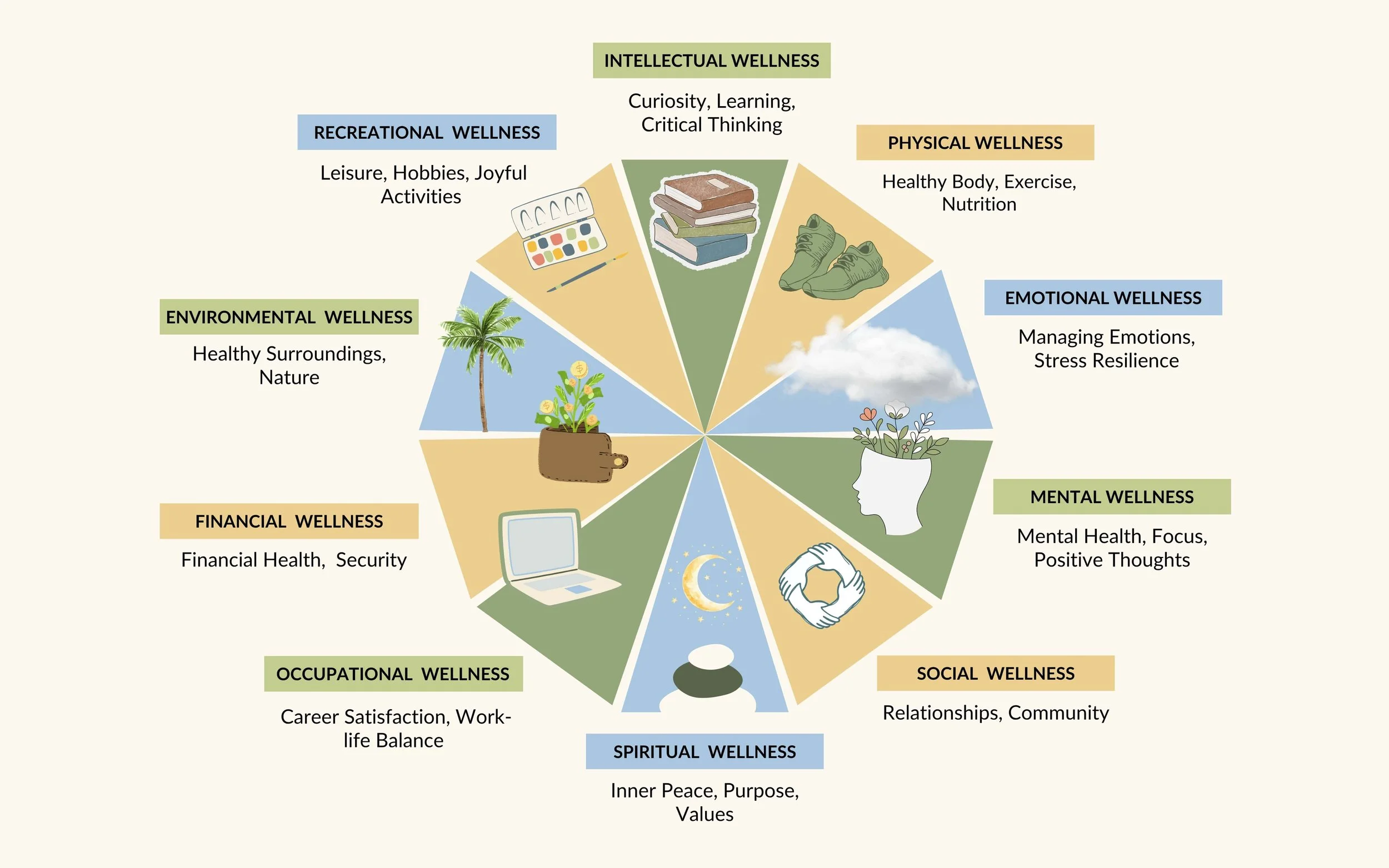
Whole Person Wellness Wheel
Recovery Capital: Building the Resources That Support Long-Term Healing
One of the most important concepts in modern addiction treatment is recovery capital.
Recovery capital refers to the internal and external resources that help someone begin recovery, maintain recovery, and continue growing throughout life.
Rather than focusing only on what someone has lost, recovery capital asks a different question:
"What strengths and supports can we build to help recovery thrive?"
The more recovery capital a person develops, the stronger their foundation for lasting recovery becomes.
How You Can Build Resilience in Recovery Using Internal Recovery Capital
Internal recovery capital includes the strengths you carry within yourself.
These resources often grow throughout recovery and become more resilient over time.
Examples include:
Emotional regulation
Healthy coping skills
Self-awareness
Confidence
Hope
Motivation
Resilience
Problem-solving abilities
Distress tolerance
Physical health
Spiritual connection
Self-compassion
Recovery knowledge
These are not qualities people either have or don't have.
They are skills that can be developed through intentional practice and support.
Why White-knuckling It Alone Doesn't Work, and Where External Recovery Capital Comes In
Recovery is not meant to happen alone.
External recovery capital includes the people, environments, and opportunities that strengthen recovery.
Examples include:
Supportive family
Healthy friendships
Recovery communities
Peer support
Medical providers
Stable housing
Employment
Transportation
Financial stability
Safe environments
Community resources
Meaningful activities
Educational opportunities
Often, healing involves strengthening both internal and external resources together.
Why Intensive Outpatient Programs Support Whole-Person Healing
One of the reasons I love providing Intensive Outpatient Programming (IOP) is because it gives clients the time and support to work on the whole picture—not just substance use.
With nine or more hours of treatment each week, clients have the opportunity to explore the many areas of life that addiction has affected.
Instead of asking only,
"How do we stop using?"
We also ask:
How do we rebuild healthy relationships?
How do we manage stress differently?
What purpose gives life meaning?
How do we heal trauma?
How do we strengthen emotional resilience?
What routines support recovery?
How do we improve physical wellness?
What boundaries create safety?
How do we create a life worth protecting?
Recovery becomes more than stopping a behavior.
It becomes building a lifestyle.
Lifestyle Change Is the Heart of Recovery
One of the biggest misconceptions about addiction treatment is that recovery ends when someone completes a program.
In reality, treatment is often where recovery begins.
Long-term recovery is built through hundreds of small choices made every day.
Learning healthier ways to:
Respond to stress
Build relationships
Regulate emotions
Care for the body
Manage finances
Create healthy routines
Find purpose
Experience joy without substances
These changes don't happen overnight.
They happen one decision at a time.
One day at a time.
One healthy habit at a time.
Healing the Whole Person
In my practice, I believe addiction is never just about the substance.
It is about the whole person.
That's why treatment includes much more than relapse prevention.
Together, we may explore:
Trauma healing
Nervous system regulation
Emotional resilience
Relationship repair
Recovery capital building
Purpose and values
Lifestyle changes
Physical wellness
Spiritual growth, when meaningful to the client
Each of these areas strengthens another part of the wellness wheel.
As one dimension begins to heal, the others often become easier to strengthen as well.
Recovery creates momentum.
Recovery Is About Building a Life Worth Living
The ultimate goal of recovery isn't simply avoiding alcohol or drugs.
It's creating a life where substances are no longer needed to cope with stress, trauma, loneliness, or emotional pain.
That life is built through connection.
Purpose.
Health.
Relationships.
Confidence.
Meaning.
And recovery capital that continues growing throughout life.
Every healthy choice adds another spoke to the wheel.
Every new skill becomes another resource.
Every supportive relationship strengthens your foundation.
Recovery is not about becoming a different person.
It's about becoming more fully yourself.
Whole-Person Healing at Holistic Recovery Services
At Holistic Recovery Services, I believe every person deserves treatment that addresses the whole of who they are—not just the symptoms of addiction.
Whether you're participating in individual therapy, a substance use evaluation, or an Intensive Outpatient Program, my goal is to help you build lasting recovery by strengthening every dimension of wellness.
Together, we'll identify the recovery capital you already possess, develop the resources you still need, and create a recovery plan that supports your unique life, values, and goals.
Because lasting recovery isn't built by simply removing substances.
It's built by creating a life that feels meaningful, connected, healthy, and worth protecting.